
How Hospitals Use Temporary Kitchens During Central Sterile Expansion Projects Without Interrupting Patient Nutrition


Article Plan
- Key Takeaways
- Why Central Sterile Expansion Projects Create Major Foodservice Challenges
- Why Hospitals Cannot Simply Outsource All Meals During Construction
- How Infection-Control Zones Change Foodservice Operations
- Why Utility Planning Becomes Extremely Difficult During Hospital Renovations
- Why Dishwashing Systems Become a Hidden Bottleneck
- How Smart Hospitals Are Treating Foodservice as Infrastructure
- External Guidance Hospitals Commonly Review
- Bottom Line
Hospitals use temporary kitchens, refrigeration trailers, dishwashing systems, and modular foodservice infrastructure during central sterile expansion projects to maintain uninterrupted patient nutrition, staff meals, and dietary operations while permanent kitchen spaces are affected by construction, utility shutdowns, infection-control zones, and phased renovations.
Key Takeaways
- Hospitals cannot stop foodservice during construction: Patient nutrition, therapeutic diets, and tray-line operations must continue every day.
- Central sterile projects often affect nearby utilities: Water, power, ventilation, and access routes may all be disrupted during expansion work.
- Temporary kitchens are complete operating systems: Most hospital deployments include refrigeration, dishwashing, wastewater planning, ramps, generators, and temporary dining support.
- Infection-control planning changes kitchen workflows: Staff movement, delivery paths, and meal transport routes usually need redesign during construction.
- Early continuity planning reduces operational risk: Hospitals that start temporary kitchen planning early usually avoid expensive delays and emergency outsourcing costs.
Why Central Sterile Expansion Projects Create Major Foodservice Challenges
Most people outside healthcare do not realize how connected hospital departments actually are. A central sterile expansion project may sound like it only affects surgical equipment processing, but in reality, these projects can impact loading docks, utility corridors, ventilation systems, staff movement paths, electrical systems, water supply, and nearby kitchen operations at the same time.
Hospitals usually continue operating during construction because shutting down patient care completely is rarely possible. That means patient meals still have to move on schedule even while demolition crews, contractors, infection-control barriers, electricians, plumbers, and utility teams are working nearby.
A lot of healthcare systems discover pretty quickly that foodservice continuity becomes one of the hardest operational problems during phased hospital construction.
Patients still expect breakfast trays to arrive on time. Clinical nutrition teams still need therapeutic diet controls. Staff members still need meals during long shifts. Visitors still use cafeterias. None of that stops because construction crews arrive.
That is why more hospitals now use temporary kitchens and modular foodservice systems during major infrastructure upgrades instead of relying completely on outsourced meal delivery.
Healthcare organizations reviewing continuity planning are also studying
temporary kitchens designed specifically for high-volume healthcare catering
because hospital foodservice operations are very different from normal commercial kitchens.
Why Hospitals Cannot Simply Outsource All Meals During Construction
At first, outsourcing meals may sound easier. Leadership sometimes assumes another kitchen can cook meals offsite and truck them to the hospital. In smaller projects, that may work temporarily. But large healthcare systems often discover several problems very quickly.
First, hospitals usually manage large meal counts every day. Some facilities produce thousands of patient meals daily while also supporting cafeterias, staff dining, physician lounges, and retail operations.
Second, hospitals manage therapeutic diets that require strict controls. Low sodium diets, diabetic meals, renal diets, allergen restrictions, texture-modified foods, pediatric meals, and clinical nutrition protocols cannot always be handled easily through outside vendors.
Third, transportation creates risk. The longer meals stay in transit, the harder it becomes to maintain temperature control and tray timing.
According to
CDC food safety guidance, temperature control failures increase food safety risks quickly in institutional operations.
Healthcare systems also worry about patient satisfaction. Delayed trays, inconsistent meal temperatures, limited menu flexibility, and transport mistakes can create complaints very fast.
That is why many hospitals eventually decide that maintaining onsite production through temporary kitchens creates more operational stability during long-term construction projects.
How Temporary Hospital Kitchens Actually Work During Construction
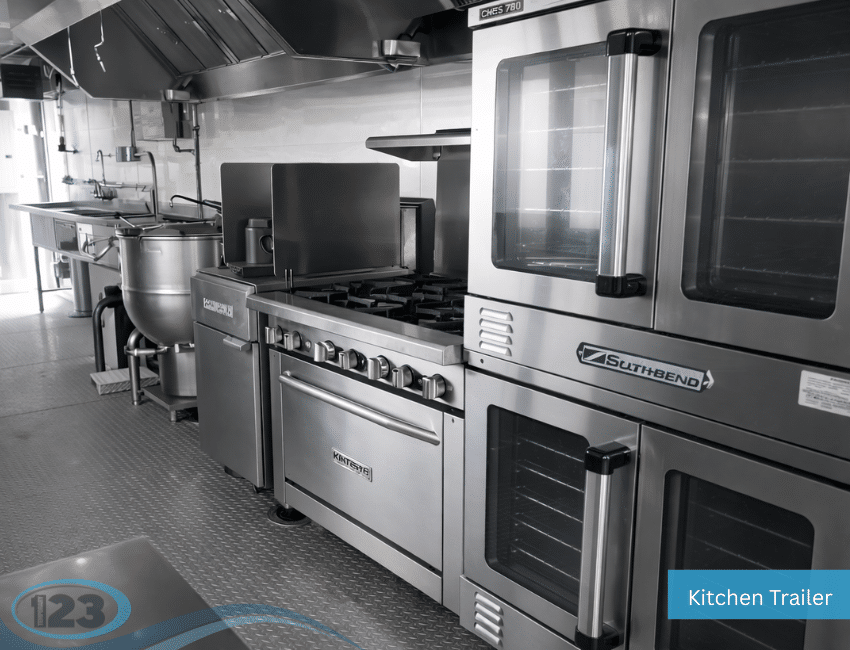
Temporary hospital kitchen deployments are usually much larger and more complicated than people expect.
A lot of healthcare administrators imagine a single trailer parked outside the building. Real deployments often involve several connected systems working together.
A hospital continuity deployment may include:
- Mobile commercial kitchen trailers
- Temporary refrigeration trailers
- Freezer storage containers
- Dishwashing trailers
- Temporary prep kitchens
- Portable handwashing stations
- Wastewater tanks
- Backup generators
- ADA ramps and access paths
- Temporary staff dining areas
- Dry storage containers
- Meal assembly and tray-line support zones
Temporary Kitchens 123 operational materials explain that healthcare deployments usually require extensive planning around workflow separation, utility coordination, refrigeration redundancy, sanitation systems, and patient meal timing.
In many hospital projects, the kitchen itself becomes only one part of the continuity operation.
How Infection-Control Zones Change Foodservice Operations
One thing that makes hospital projects very different from hotels, schools, or stadiums is infection control.
During central sterile expansion projects, construction areas may require negative air pressure systems, temporary barriers, controlled movement zones, dust management, and restricted access paths.
That changes how foodservice teams move through the facility.
Loading routes may change. Elevator access may become restricted. Staff entrances may move temporarily. Food deliveries may need rerouting.
Meal carts and tray-line systems also need careful planning because hospitals cannot allow construction contamination to affect patient nutrition areas.
Many healthcare systems therefore redesign meal movement workflows completely during renovation phases.
The operational challenge is not only cooking food. The real challenge becomes safely moving food through a changing hospital environment while construction continues around the facility.
Why Refrigeration Becomes One of the Biggest Operational Risks
A lot of healthcare continuity projects focus heavily on cooking equipment but underestimate refrigeration planning.
In reality, refrigeration failures create some of the fastest operational emergencies during temporary kitchen deployments.
Hospitals usually maintain large cold inventory levels because patient feeding cannot stop unexpectedly.
Therapeutic ingredients, dairy products, prepared meals, produce, medications stored near dietary operations, supplements, and backup emergency inventory all require stable cold storage.
Temporary refrigeration systems therefore become critical during construction.
Healthcare systems reviewing continuity planning often also study
how foodservice providers handle supply chains during emergency deployments
because inventory disruptions can quickly affect hospital meal operations.
Door openings, unstable generators, overloaded circuits, hot weather, poor airflow, and long loading cycles can all affect refrigeration performance.
According to
USDA FSIS food safety guidance, refrigeration stability is one of the most important controls in institutional foodservice environments.
How Hospitals Redesign Tray-Line Operations During Temporary Kitchen Deployments
Patient tray delivery systems become much harder during hospital construction projects.
Normal workflows may no longer work because hallways, elevators, service corridors, and staging areas change throughout the project.
Some hospitals create temporary tray assembly zones closer to patient towers while bulk production continues inside temporary kitchens outside the facility.
Other hospitals redesign delivery timing entirely to reduce congestion during construction hours.
Many healthcare systems also simplify menus temporarily during construction because reducing complexity helps stabilize production.
That does not mean patient nutrition quality decreases. It usually means the hospital focuses more heavily on operational consistency during the temporary phase.
Why Utility Planning Becomes Extremely Difficult During Hospital Renovations
Power and water disruptions become a major issue during central sterile expansion projects because those projects often involve heavy utility work inside the hospital.
Electrical shutdowns, chilled water interruptions, plumbing modifications, ventilation work, and corridor closures can all affect nearby kitchen systems.
Temporary kitchen deployments therefore need very careful utility planning before equipment arrives onsite.
| Infrastructure System | Why Hospitals Need It | Common Construction Risk |
|---|---|---|
| Electrical Power | Supports refrigeration, cooking, HVAC, tray-line systems | Utility shutdowns during renovation work |
| Refrigeration Systems | Protects patient food inventory and therapeutic diets | Unstable temporary power connections |
| Wastewater Handling | Maintains sanitation and warewashing | Drain access disruptions during construction |
| Ventilation | Protects worker safety and food quality | Dust and negative air pressure conflicts |
| Meal Transport Routes | Maintains tray delivery schedules | Closed hallways and elevator restrictions |
Many hospitals also underestimate generator planning during temporary deployments.
Commercial kitchen equipment requires serious electrical capacity. Refrigeration, HVAC, dishwashing systems, lighting, ovens, and hot holding systems all add electrical demand quickly.
Temporary Kitchens 123 materials explain that many mobile kitchens require 100–220 amps depending on the equipment package and operational load.
If generator sizing is wrong or electrical tie-ins are delayed, operations can become unstable very fast.
Why Dishwashing Systems Become a Hidden Bottleneck
Dishwashing systems are another area hospitals often underestimate during continuity planning.
Patient tray systems generate huge amounts of reusable dishware every day.
Some hospitals temporarily switch to disposable service during short projects because it reduces warewashing demand and wastewater production.
Longer projects often require temporary dishwashing trailers because reusable tray systems still support patient feeding workflows more effectively.
| Service Style | Main Advantage | Main Challenge |
|---|---|---|
| Disposable Service | Reduces warewashing and water demand | Increases supply usage and trash volume |
| Reusable Tray Systems | Supports normal patient workflows | Requires warewashing infrastructure |
| Hybrid Service Model | Provides operational flexibility | More complicated inventory planning |
Healthcare continuity teams are also studying
what large foodservice operators look for in mobile kitchen vendors
because warewashing support, refrigeration planning, and utility coordination usually matter more than the trailer itself.
Case Study: Hospital Central Sterile Expansion Project
A regional healthcare system started a major central sterile expansion project expected to last more than nine months.
The project affected nearby utility corridors, loading access, and part of the permanent dietary department.
Leadership originally considered outsourcing patient meals completely, but transportation concerns, dietary complexity, and operational risks made that difficult.
Instead, the hospital deployed temporary kitchens, refrigeration trailers, temporary prep space, and modular tray assembly support near the facility.
The deployment maintained more than 4,200 patient meals daily while construction continued in phases.
One of the biggest lessons from the project was that communication between construction teams and foodservice leadership became just as important as the equipment itself.
Meal routes changed several times during the renovation, and refrigeration planning required constant monitoring during utility transitions.
The hospital also simplified cafeteria operations temporarily so dietary staff could focus more heavily on patient feeding continuity.
How Smart Hospitals Are Treating Foodservice as Infrastructure
One major shift happening in healthcare right now is that hospitals are beginning to treat foodservice continuity more like critical infrastructure planning.
A few years ago, many organizations viewed temporary kitchens mostly as emergency rentals.
Now healthcare systems increasingly view them as operational continuity assets tied to patient care, infrastructure resilience, and emergency preparedness.
Hospitals planning future resilience programs are also reviewing
how mobile kitchens support resilient urban infrastructure
because healthcare continuity depends heavily on foodservice stability during infrastructure disruptions.
The trend is moving toward:
- Smarter refrigeration monitoring
- Remote temperature tracking
- Better utility redundancy planning
- Modular dining infrastructure
- Faster deployment coordination
- Integrated emergency foodservice planning
- Infrastructure resilience programs
External Guidance Hospitals Commonly Review
Hospitals planning temporary foodservice operations often review guidance from organizations like the
CDC,
OSHA,
NFPA,
USDA FSIS, and
The Joint Commission when developing continuity procedures, sanitation protocols, worker safety programs, and temporary healthcare infrastructure plans.
Many healthcare systems also monitor climate and infrastructure disruption data from
NOAA because weather events increasingly affect hospital operations, utility stability, transportation, and emergency response planning.
Bottom Line
Hospitals cannot afford interruptions in patient nutrition during central sterile expansion projects. Temporary kitchens, refrigeration systems, dishwashing support, modular prep areas, and continuity planning help healthcare systems maintain patient meal operations while construction continues nearby.
The hospitals that handle these projects best usually start planning early and treat foodservice continuity like critical infrastructure instead of an afterthought. During large healthcare renovations, the real challenge is not only building new space. The real challenge is protecting patient care while the hospital continues operating around it.
This article was developed using operational information related to Temporary Kitchens 123, Temporary 123, Ice Fox Equipment, temporary dishwashing systems, healthcare foodservice continuity planning, refrigeration support, modular kitchen deployments, emergency feeding operations, and institutional foodservice infrastructure across the United States and Canada.
Request a Quote
Every project is different.
Contact us today to get a customized solution for your needs.
Call Temporary Kitchens 123 at
