
Temporary Kitchens for Offshore Wind Farm Construction Ports: Feeding Crews During Marine Energy Buildouts


Article Plan
- Key Takeaways
- Why Offshore Wind Projects Are Creating New Workforce Feeding Challenges
- Why Offshore Wind Projects Operate Like Temporary Industrial Cities
- Why Refrigeration Is Critical in Marine Construction Environments
- Why Dining Areas Matter on Offshore Wind Projects
- Case Study: Offshore Wind Port Workforce Feeding Operation
- Bottom line
- Frequently Asked Questions
Offshore wind farm construction ports use temporary kitchens, refrigeration systems, modular dining infrastructure, wastewater support, and mobile workforce feeding operations to support marine construction crews, engineers, logistics teams, welders, crane operators, and offshore personnel during large-scale renewable energy buildouts while reducing downtime and improving operational continuity.
Key Takeaways
- Offshore wind projects create massive temporary workforce demands: Marine energy buildouts often involve hundreds or thousands of workers operating around the clock.
- Port staging areas need workforce infrastructure: Temporary kitchens, dining areas, refrigeration, sanitation, and support facilities become critical during turbine assembly and logistics operations.
- Remote marine environments create foodservice challenges: Many offshore projects operate in industrial ports with limited nearby foodservice capacity.
- Weather and logistics heavily affect operations: Wind delays, vessel schedules, and marine transport timelines make flexible feeding systems important.
- Temporary kitchens support more than meals: Hydration, worker safety, shift coordination, and workforce morale are all connected to foodservice planning.
Why Offshore Wind Projects Are Creating New Workforce Feeding Challenges
The offshore wind industry is growing quickly across North America and Europe. Governments, utility companies, and energy developers are investing billions of dollars into offshore wind infrastructure as countries push toward renewable energy goals.
But behind the turbines, cables, substations, and marine engineering work, there is another operational issue many people overlook: feeding the workforce.
Large offshore wind projects often involve:
- Marine construction crews
- Crane operators
- Heavy transport teams
- Port logistics workers
- Steel fabricators
- Welders
- Electrical contractors
- Engineers
- Safety teams
- Offshore vessel personnel
Many projects operate out of industrial ports that were never designed to feed thousands of temporary workers every day.
That creates a major workforce support challenge during marine energy buildouts.
Temporary kitchens and modular dining systems are now becoming an important part of offshore wind construction infrastructure because workers still need meals, hydration, break areas, sanitation, and operational support while ports are transformed into turbine assembly and logistics hubs.
Temporary Kitchens 123 operational materials explain that large workforce feeding operations often require much more than one kitchen trailer. Refrigeration systems, wastewater handling, dining facilities, ramps, sanitation support, generators, and temporary infrastructure coordination all become important during deployment.
Organizations planning large infrastructure projects are also reviewing how construction delays impact institutional foodservice operations because delays in workforce support can affect productivity and operational schedules during complex marine construction projects.
Why Offshore Wind Ports Need Temporary Foodservice Infrastructure
Most offshore wind projects operate from staging ports where turbine components, blades, nacelles, foundations, cables, and support equipment are assembled before deployment offshore.
During active construction phases, these ports may suddenly experience:
- Large temporary workforces
- Heavy truck traffic
- Extended operating hours
- Marine vessel schedules
- Restricted security zones
- Temporary utility systems
- Weather delays
- Complex logistics coordination
Nearby restaurants usually cannot handle that kind of temporary industrial demand.
Without onsite foodservice support, workers may lose significant time traveling for meals. That can create:
- Lost labor hours
- Port congestion
- Schedule delays
- Security access problems
- Worker fatigue
- Hydration issues during hot weather
This is why many offshore wind projects now use temporary kitchens directly inside or near the active port operation.
| Marine Construction Challenge | Operational Impact | Temporary Kitchen Solution |
|---|---|---|
| Remote industrial port location | Limited nearby food access | Onsite mobile kitchens |
| Large rotating crews | Meal congestion and delays | Bulk meal production systems |
| 24/7 vessel operations | Overnight feeding needs | Shift-based foodservice support |
| Security-controlled port access | Slow worker movement | Foodservice inside secure zones |
| Severe weather exposure | Worker fatigue and safety concerns | Climate-controlled dining areas |
Why Offshore Wind Projects Operate Like Temporary Industrial Cities
Many offshore wind staging ports operate almost like temporary industrial cities during peak construction.
The project may include:
- Temporary offices
- Marine logistics hubs
- Worker parking zones
- Security checkpoints
- Storage yards
- Temporary utilities
- Break facilities
- Fuel systems
- Heavy crane zones
- Equipment staging areas
Temporary 123 materials discuss not only kitchens but also office trailers, restroom trailers, shower systems, laundry support, wastewater systems, ramps, water tanks, and temporary infrastructure services.
This matters because offshore wind projects require workforce support systems long before permanent infrastructure is available.
The temporary kitchen therefore becomes part of a much larger operational basecamp environment.
How Mobile Kitchens Support Marine Construction Operations
Marine construction schedules are difficult because weather and tides affect operations constantly.
Some crews may start before sunrise. Others may return from offshore work late at night. Vessel schedules may shift suddenly due to weather windows.
That means foodservice systems need flexibility.
A temporary kitchen on an offshore wind project may support:
- Early breakfast service
- Lunch feeding for port crews
- Late-night meals
- Grab-and-go meals for vessel teams
- Hydration support
- Coffee stations
- Emergency feeding during delays
- Shift-based dining schedules
Mobile kitchens help keep crews close to the worksite instead of sending them offsite for meals.
Organizations studying broader emergency logistics are also reviewing mobile kitchen solutions for offshore energy platforms and remote marine sites because offshore workforce support often requires flexible infrastructure planning.
Standard Kitchen vs Bulk Kitchen for Offshore Workforce Feeding
Different offshore wind projects need different kitchen systems depending on workforce size and operational complexity.
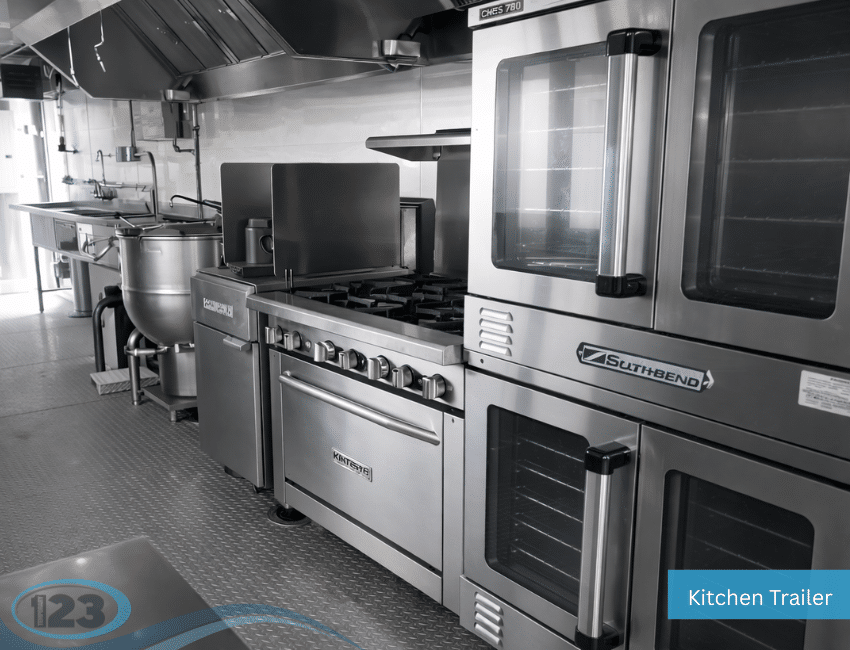
Smaller port operations may only need standard commercial kitchen setups with:
- Griddles
- Fryers
- Ranges
- Convection ovens
- Prep tables
Larger marine construction projects often require bulk production systems capable of feeding hundreds or thousands of workers efficiently.
Temporary Kitchens 123 operational materials discuss bulk production kitchens using:
- Tilt skillets
- Steam kettles
- Double-stack convection ovens
- Hot holding systems
- Bulk refrigeration support
| Kitchen Type | Best Offshore Wind Use | Main Advantage |
|---|---|---|
| Standard Mobile Kitchen | Smaller marine crews | Flexible menu production |
| Bulk Production Kitchen | Large turbine assembly ports | High-volume meal output |
| Hybrid Kitchen Setup | Long multi-phase projects | Scales with workforce growth |
| Grab-and-Go Meal Support | Vessel departures and rotating shifts | Fast workforce movement |
Bulk equipment becomes especially useful because marine construction schedules often create short feeding windows between vessel movements and crane operations.
Why Refrigeration Is Critical in Marine Construction Environments
Offshore wind projects require reliable cold storage because workforce feeding volumes can become very large during peak operations.
Temporary refrigeration systems may store:
- Proteins
- Dairy products
- Prepared meals
- Frozen inventory
- Beverages
- Produce
- Grab-and-go items
- Emergency backup stock
Marine environments create additional refrigeration challenges:
- Salt air exposure
- Humidity
- Extreme weather
- Temporary power systems
- Heavy equipment traffic
- Long operating hours
Ice Fox Equipment materials describe refrigeration trailers and temporary cold storage systems used for industrial projects, hospitality, healthcare, disaster response, and remote operations.
Food safety guidance from CDC Food Safety and USDA FSIS emphasizes temperature control as one of the most important parts of institutional foodservice.
A strong refrigeration plan should include:
- Backup generator support
- Temperature monitoring
- Protected trailer placement
- Safe delivery access
- Inventory rotation procedures
- Weather contingency planning
Power Planning for Temporary Kitchens at Marine Ports
Power planning can become difficult because temporary construction infrastructure changes throughout the project.
Mobile kitchens may require:
- 220V electrical service
- 100–220 amps depending on size
- Dedicated refrigeration circuits
- Generator backup
- Temporary utility panels
- Protected cable routing
Temporary Kitchens 123 operational materials discuss common electrical ranges for kitchen trailers, dishwashing systems, and refrigeration units.
Port operations therefore need coordination between:
- Marine contractors
- Electrical teams
- Port authorities
- Kitchen deployment providers
- Generator vendors
Without proper planning, kitchens may arrive before utility systems are fully operational.
Water, Wastewater, and Sanitation Infrastructure
Marine construction ports need strong sanitation planning because large workforce feeding operations generate significant water and wastewater demand.
Temporary 123 materials discuss:
- Water trucks
- Water buffalo trailers
- Potable water systems
- Wastewater tanks
- Pump-out schedules
- Attendant services
- Sanitation logistics
An offshore wind deployment may require:
- Fresh water delivery
- Wastewater handling
- Grease collection
- Portable handwashing systems
- Dishwashing wastewater management
- Daily sanitation support
Organizations planning around infrastructure resilience are also reviewing how foodservice operations continue during major utility failures because marine construction zones often experience temporary utility disruptions.
Why Dining Areas Matter on Offshore Wind Projects
Workers need safe and comfortable places to eat, hydrate, and recover during long marine construction shifts.
Temporary dining facilities may include:
- Climate-controlled dining tents
- Modular dining structures
- Tables and seating
- Coffee stations
- Hydration stations
- Lighting systems
- Subflooring
- Waste collection zones
Temporary Kitchens 123 materials discuss temporary dining systems with HVAC, seating, lighting, steam tables, and cafeteria-style layouts.
Meal schedules are often staggered between crane crews, marine logistics teams, welders, and vessel personnel to reduce congestion.
Worker Safety and Weather Exposure During Marine Energy Projects
Marine construction environments can become physically demanding very quickly.
Workers may face:
- High winds
- Rain exposure
- Heat stress
- Cold temperatures
- Long shifts
- Heavy PPE requirements
- Extended outdoor work
Foodservice therefore becomes connected to worker safety and operational stability.
Onsite kitchens and dining areas support:
- Hydration access
- Weather protection
- Organized meal schedules
- Reduced offsite travel
- Worker morale
- Safer shift coordination
OSHA guidance on worker heat exposure and safety is becoming increasingly important during large industrial and marine construction operations.
Case Study: Offshore Wind Port Workforce Feeding Operation
A major offshore wind staging port began a multi-phase turbine assembly and marine logistics project expected to continue for several years.
During peak activity, more than 2,800 workers operated onsite across rotating shifts.
The surrounding area had limited restaurant capacity, and vessel schedules created difficult meal timing challenges.
The temporary deployment included:
- Mobile kitchen trailers
- Bulk production cooking systems
- Temporary refrigeration trailers
- Climate-controlled dining structures
- Wastewater support
- Hydration stations
- Portable sanitation systems
The operation supported more than 4,500 meals daily during peak construction and marine logistics periods.
One of the biggest lessons from the project was that workforce feeding needed to be integrated into port logistics planning from the very beginning.
How Temporary Kitchens Reduce Delays During Marine Construction
Offshore wind projects operate under tight marine schedules and expensive vessel timelines.
Temporary kitchens help reduce:
- Lost labor time
- Meal-related congestion
- Worker fatigue
- Offsite travel delays
- Emergency catering costs
- Operational disruption during weather delays
- Shift coordination problems
Organizations studying construction continuity are also reviewing how modular kitchen systems reduce business interruption costs because workforce support directly affects operational schedules during large marine infrastructure projects.
The return on investment is not only about meals. It is about keeping the port operation moving efficiently.
Future Trends for Offshore Wind Workforce Feeding
In 2026 and beyond, offshore wind projects will likely require more advanced temporary workforce infrastructure as marine energy construction continues expanding globally.
The trend is moving toward:
- Remote refrigeration monitoring
- AI-assisted workforce meal forecasting
- Modular dining hubs
- Hybrid power systems
- Improved marine sanitation planning
- Integrated workforce basecamp support
- Faster deployment coordination
Organizations are also studying the technology powering modern mobile kitchen fleets because infrastructure visibility and operational reliability are becoming increasingly important during long-duration renewable energy projects.
Bottom Line
Offshore wind farm construction projects are creating a new generation of workforce feeding challenges across marine energy infrastructure.
Temporary kitchens, refrigeration systems, modular dining facilities, wastewater support, and workforce basecamp planning help keep crews onsite, reduce delays, and support around-the-clock port operations during offshore wind buildouts.
The strongest marine energy projects treat workforce feeding as part of operational infrastructure instead of an afterthought. During large offshore wind construction programs, feeding the workforce becomes part of keeping the entire port operation moving.
This article was developed using operational information related to Temporary Kitchens 123, Temporary 123, Ice Fox Equipment, temporary dishwashing systems, modular kitchen deployments, senior living foodservice continuity, refrigeration support, water and wastewater planning, and institutional foodservice infrastructure across the United States and Canada. Related company resources include Temporary Kitchens 123, Temporary 123, Ice Fox Equipment, and Temporary Dishwashing Rentals.Request a Quote
Every project is different.
Contact us today to get a customized solution for your needs.
Call Temporary Kitchens 123 at

Frequently Asked Questions
Why do offshore wind projects use temporary kitchens?
Offshore wind projects often involve large temporary workforces operating in industrial ports where nearby restaurants cannot support workforce feeding demand.
Can mobile kitchens support marine construction crews working overnight?
Yes. Mobile kitchens can support breakfast, lunch, dinner, overnight meals, grab-and-go feeding, hydration support, and rotating marine work schedules.
What utilities are needed for temporary kitchens at offshore wind ports?
Most deployments require electrical power, potable water, wastewater handling, refrigeration support, generator coordination, and safe access routes.
Why is refrigeration important during marine energy construction?
Temporary refrigeration systems protect proteins, dairy products, beverages, prepared meals, frozen inventory, and workforce food supplies during long-term port operations.
How do temporary kitchens improve offshore wind project productivity?
Onsite foodservice reduces worker travel time, meal congestion, security delays, and operational downtime while improving workforce coordination and morale.