
How Data Centers and AI Server Campuses Use Temporary Kitchens During Multi-Billion Dollar Expansion Projects


Article Plan
- Key Takeaways
- Why AI Data Center Expansion Is Creating a New Temporary Kitchen Market
- Why Data Center Projects Operate More Like Industrial Basecamps
- Standard Kitchen vs Bulk Kitchen for AI Campus Projects
- Power Requirements for Temporary Kitchens on Data Center Campuses
- Case Study: AI Campus Expansion Workforce Feeding Project
- Bottom line
- Frequently Asked Questions
Data centers and AI server campuses use temporary kitchens, refrigeration trailers, modular dining systems, wastewater support, and mobile foodservice infrastructure during large-scale expansion projects to feed construction crews, engineers, security teams, and technical staff while maintaining productivity, reducing downtime, and supporting around-the-clock operations at remote industrial campuses.
Key Takeaways
- AI infrastructure projects are growing fast: New data center campuses and AI server facilities are creating huge workforce feeding challenges across North America.
- Remote locations increase foodservice pressure: Many hyperscale data centers are built in industrial or rural areas with limited nearby restaurants.
- Temporary kitchens help reduce labor downtime: Onsite foodservice reduces offsite travel and helps workers stay productive during long shifts.
- Data center projects operate almost 24/7: Mobile kitchens often support overnight crews, security teams, commissioning staff, and rotating contractors.
- Temporary infrastructure involves more than cooking: Refrigeration, wastewater, generators, dining facilities, ramps, water service, and sanitation all matter during deployment.
Why AI Data Center Expansion Is Creating a New Temporary Kitchen Market
The growth of AI infrastructure is changing construction across North America. Large technology companies, hyperscale cloud providers, and AI server operators are building massive campuses that require enormous amounts of labor, utilities, cooling infrastructure, and operational support.
A lot of people focus on the servers, the power demand, and the cooling systems. But there is another operational issue growing quietly behind the scenes: feeding thousands of workers during construction and expansion.
Modern AI campuses are not small buildings anymore. Some projects involve several phases of development over multiple years. These sites may include:
- Multiple server halls
- Substations
- Cooling plants
- Administrative buildings
- Network infrastructure
- Battery backup systems
- Security operations
- Temporary construction offices
- Mechanical yards
All of this requires workers. And those workers need food, water, sanitation, break areas, and meal support every day.
That is where temporary kitchens and modular foodservice systems become important.
Temporary Kitchens 123 operational materials explain that workforce feeding operations often require much more than one kitchen trailer. Large deployments may involve refrigeration systems, wastewater handling, dishwashing support, temporary dining structures, ramps, generators, potable water service, and operational logistics.
Organizations planning long-term infrastructure expansion are also reviewing how construction delays impact institutional foodservice operations because labor disruptions, utility delays, and logistical bottlenecks can affect productivity quickly on massive construction campuses.
Why Data Center Construction Sites Need Onsite Foodservice
Many AI server campuses are built outside major urban centers because operators need land, utility access, cooling potential, and electrical capacity.
The problem is that these remote or industrial locations often have very limited foodservice infrastructure nearby.
A small town may suddenly receive:
- Electricians
- Fiber crews
- Pipefitters
- Concrete teams
- HVAC contractors
- Commissioning engineers
- Security personnel
- Heavy equipment operators
- Technical specialists
The local restaurant market usually cannot absorb thousands of extra workers overnight.
Without onsite foodservice, workers may spend large amounts of time driving offsite for meals. That creates:
- Lost labor time
- Traffic congestion
- Scheduling delays
- Security re-entry slowdowns
- Worker frustration
- Safety risks during rushed meal breaks
This is why many data center construction projects now use temporary kitchens and modular dining systems directly onsite.
| Construction Challenge | Operational Impact | Temporary Kitchen Solution |
|---|---|---|
| Remote project location | Limited restaurant access | Onsite mobile kitchen operations |
| Large contractor workforce | Meal delays and congestion | Multiple serving lines and dining areas |
| 24/7 construction schedule | Overnight feeding needs | Shift-based foodservice support |
| Security checkpoints | Slow re-entry after meal breaks | Foodservice inside controlled zones |
| Extreme weather conditions | Worker fatigue and heat stress | Hydration stations and climate-controlled dining |
Why Data Center Projects Operate More Like Industrial Basecamps
Many large AI campuses now function almost like industrial basecamps during construction.
A project may run for several years with rotating contractor groups, phased expansion schedules, and multiple simultaneous work zones.
That means foodservice planning must support:
- Long-term operations
- Changing workforce size
- Night shifts
- Extreme weather
- Temporary utility systems
- Security-controlled access
- High-volume meal periods
Temporary 123 materials discuss not only mobile kitchens but also restroom trailers, shower units, laundry support, water tanks, command centers, office trailers, ramps, wastewater systems, and basecamp-style infrastructure support.
That broader infrastructure model fits very well with modern data center construction because workforce support goes beyond just food.
How Mobile Kitchens Support 24/7 Construction Operations
Most hyperscale AI campuses operate on aggressive timelines. Delays can become extremely expensive because server deployment schedules, power contracts, and technology rollouts are tightly connected.
That means construction activity often continues around the clock.
A temporary kitchen on a data center project may therefore support:
- Early breakfast service
- Lunch for multiple contractor groups
- Late-night feeding
- Grab-and-go meals
- Security team meals
- Hydration support
- Commissioning crew meals
- Emergency feeding during utility outages
Instead of workers leaving the campus, meals can be served near active work zones or centralized break areas.
This helps reduce downtime and improves coordination between different contractor teams.
Organizations studying broader workforce resilience are also reviewing how foodservice providers handle supply chains during emergency deployments because logistics become critical on fast-moving infrastructure projects.
Standard Kitchen vs Bulk Kitchen for AI Campus Projects
Not every data center project needs the same type of kitchen.
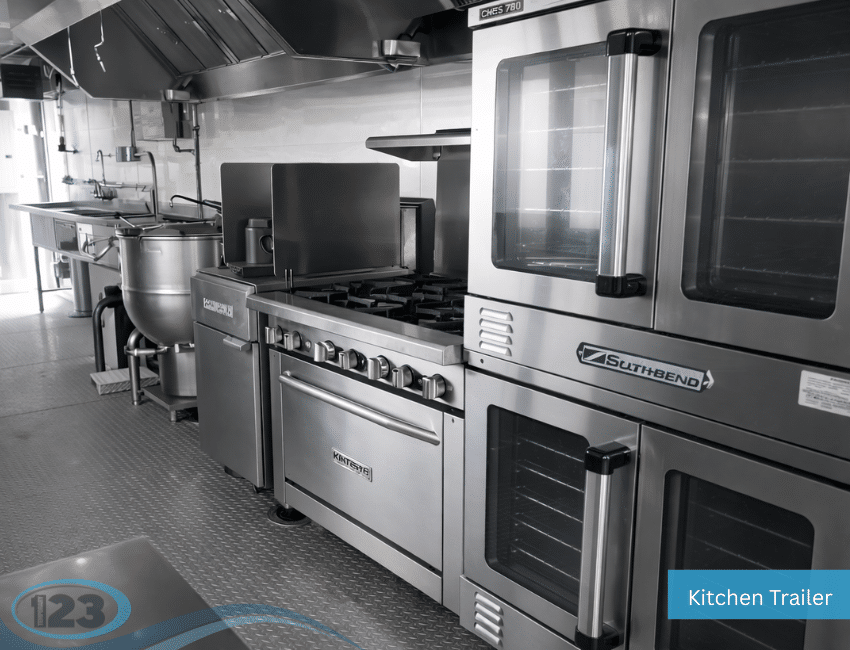
Smaller phases may use standard commercial kitchen setups with griddles, fryers, convection ovens, and prep space.
Larger workforce feeding operations often need bulk cooking systems capable of producing meals quickly and consistently.
Temporary Kitchens 123 materials discuss both standard kitchen layouts and bulk production systems.
Bulk kitchens may include:
- Tilt skillets
- Steam kettles
- Double-stack convection ovens
- Large hot holding systems
- Bulk refrigeration support
| Kitchen Type | Best Data Center Use | Main Advantage |
|---|---|---|
| Standard Mobile Kitchen | Smaller workforce phases | Menu flexibility |
| Bulk Production Kitchen | Peak construction periods | Fast large-volume meal output |
| Hybrid Kitchen Setup | Long-term campus expansion | Supports changing workforce needs |
| Grab-and-Go Support | Short meal breaks and rotating crews | Reduces service congestion |
A tilt skillet, for example, can produce large batches of proteins, vegetables, breakfast items, rice, and sauces much faster than smaller restaurant equipment. Steam kettles support soups, pasta, chili, oatmeal, and sauces at high volume.
These systems are useful because large AI campuses may feed thousands of workers daily during peak construction.
Why Refrigeration Planning Is Critical on AI Campus Projects
Temporary refrigeration becomes one of the most important parts of workforce feeding operations.
Large projects may store:
- Proteins
- Prepared meals
- Produce
- Dairy products
- Beverages
- Frozen foods
- Grab-and-go inventory
- Backup emergency stock
Many data center projects are located in regions with extreme heat. Refrigeration systems must therefore operate reliably even during difficult environmental conditions.
Ice Fox Equipment materials describe refrigerated trailers and cold storage systems used for construction projects, healthcare, hospitality, education, emergency operations, and industrial support.
Food safety agencies like
CDC Food Safety and
USDA FSIS emphasize temperature control as one of the most important parts of institutional foodservice operations.
On industrial campuses, refrigeration planning should include:
- Generator backup
- Temperature monitoring
- Proper trailer placement
- Safe delivery routes
- Protected electrical connections
- Inventory rotation procedures
- Backup storage capacity
Poor refrigeration planning can create major operational problems quickly, especially during summer construction periods.
Power Requirements for Temporary Kitchens on Data Center Campuses
Power planning is one of the biggest deployment challenges.
Ironically, even though data centers are massive power infrastructure projects, temporary kitchen areas may still face power limitations during early construction phases.
Temporary Kitchens 123 materials discuss common electrical requirements such as:
- 100–150 amps for many 24–28 ft kitchen trailers
- 200–220 amps for larger 40 ft kitchen trailers
- 40–60 amps for refrigerated trailers
- 125–220 amps for dishwashing systems
Construction teams therefore need to coordinate:
- Electrical tie-ins
- Generator staging
- Cable routing
- Temporary panels
- Utility scheduling
- Backup power support
Without early planning, kitchens may arrive before the electrical infrastructure is ready.
Water, Wastewater, and Sanitation Infrastructure
Large workforce feeding operations need strong sanitation planning.
Temporary 123 materials discuss water trucks, water buffalo trailers, stationary tanks, wastewater holding systems, pump-out schedules, and sanitation attendants.
A data center construction site may need:
- Fresh water delivery
- Potable water storage
- Wastewater tanks
- Grease collection
- Pump-out service
- Portable handwashing stations
- Dishwashing wastewater management
If wastewater planning fails, dishwashing and sanitation operations can become bottlenecks quickly.
Organizations planning around utility resilience are also reviewing how foodservice operations continue during major utility failures because water and power interruptions remain common risks during large industrial construction projects.
Why Dining Space Design Matters on AI Construction Campuses
Temporary dining areas are more important than many project managers realize.
Workers need safe, comfortable areas to take breaks, cool down, hydrate, and eat without interfering with active construction zones.
Temporary dining setups may include:
- Dining tents
- Climate-controlled modular structures
- Tables and seating
- Hydration stations
- Coffee service
- Lighting
- Subflooring
- Handwashing areas
- Trash and recycling stations
Temporary Kitchens 123 materials mention temporary dining facilities with HVAC, seating, lighting, steam tables, coffee stations, and cafeteria-style layouts.
Large campuses may also stagger meal schedules between contractor groups to reduce long lines and improve traffic flow.
Heat Stress and Worker Safety on AI Construction Projects
Data center campuses are often built in areas with difficult weather conditions. Workers may deal with heat, humidity, cold, dust, and long shifts.
Foodservice therefore becomes connected to worker safety.
Onsite dining areas can support:
- Hydration access
- Cooling zones
- Shorter walking distances
- Reduced offsite driving
- Better shift coordination
- More organized break schedules
OSHA guidance on heat exposure and worker safety is becoming increasingly relevant during large industrial construction projects where temperatures and physical labor create safety risks.
Case Study: AI Campus Expansion Workforce Feeding Project
A large AI server campus began a multi-phase expansion project expected to last several years. During peak construction, more than 3,500 workers were active onsite across multiple shifts.
The project location had limited nearby restaurant capacity, and long meal breaks were creating traffic congestion and productivity losses.
The deployment included:
- Mobile kitchen trailers
- Temporary refrigeration systems
- Grab-and-go meal stations
- Wastewater support
- Climate-controlled dining tents
- Hydration stations
- Portable sanitation infrastructure
The foodservice operation supported more than 5,000 meals daily during peak construction periods.
One of the biggest lessons from the project was that workforce feeding needed to be treated like infrastructure planning instead of an afterthought.
Meal timing was also staggered between contractor groups to reduce congestion and improve operational flow.
How Temporary Kitchens Reduce Business Interruption and Productivity Loss
Large AI infrastructure projects involve enormous budgets. Even small delays can create major financial pressure.
Temporary kitchens help reduce:
- Lost labor time
- Traffic congestion
- Offsite meal delays
- Shift coordination problems
- Worker dissatisfaction
- Emergency catering costs
- Schedule disruptions
Organizations studying construction continuity are also reviewing how modular kitchen systems reduce business interruption costs because workforce support directly affects project productivity.
The ROI is not only about food. It is about operational control.
Future Trends for AI Infrastructure Workforce Feeding
In 2026 and beyond, temporary foodservice systems will likely become more advanced as AI infrastructure projects continue growing.
The trend is moving toward:
- Remote refrigeration monitoring
- AI-assisted meal forecasting
- Modular dining hubs
- Hybrid power systems
- Smarter wastewater management
- Integrated workforce basecamp planning
- Faster deployment coordination
Organizations are also reviewing the technology powering modern mobile kitchen fleets because infrastructure visibility, equipment monitoring, and operational reliability are becoming more important during long-term deployments.
Bottom Line
AI data center expansion projects are creating a new generation of large-scale workforce feeding challenges across North America.
Temporary kitchens, refrigeration systems, dining facilities, wastewater support, and modular infrastructure help keep workers onsite, reduce operational delays, and support 24/7 construction schedules during multi-billion dollar campus expansions.
The strongest projects treat foodservice like infrastructure instead of an afterthought. During massive AI campus construction, feeding the workforce becomes part of keeping the entire project moving.
This article was developed using operational information related to Temporary Kitchens 123, Temporary 123, Ice Fox Equipment, temporary dishwashing systems, modular kitchen deployments, senior living foodservice continuity, refrigeration support, water and wastewater planning, and institutional foodservice infrastructure across the United States and Canada. Related company resources include Temporary Kitchens 123, Temporary 123, Ice Fox Equipment, and Temporary Dishwashing Rentals.Request a Quote
Every project is different.
Contact us today to get a customized solution for your needs.
Call Temporary Kitchens 123 at

Frequently Asked Questions
Why do AI data center projects need temporary kitchens?
Large AI infrastructure projects often involve thousands of workers in remote industrial locations where nearby restaurants cannot support workforce feeding demand.
Can temporary kitchens support 24/7 construction schedules?
Yes. Mobile kitchens can support breakfast, lunch, dinner, overnight feeding, hydration stations, and grab-and-go meal operations during round-the-clock construction projects.
What utilities are needed for temporary kitchens on data center campuses?
Most deployments require electrical power, potable water, wastewater handling, refrigeration support, generator coordination, and safe access routes.
Why is refrigeration important during AI campus construction?
Temporary refrigeration systems protect proteins, dairy products, prepared meals, beverages, frozen foods, and large workforce feeding inventory during long-term construction operations.
How do temporary kitchens reduce productivity loss on construction sites?
Onsite foodservice reduces offsite travel time, traffic congestion, shift delays, and security re-entry slowdowns while improving workforce coordination.