
Maintaining Casino and Resort Foodservice Operations During Large-Scale Hospitality Renovations


Article Plan
- Key Takeaways
- Why Casino and Resort Renovations Create Serious Foodservice Pressure
- How Temporary Kitchens Support Banquets, Weddings, and Convention Revenue
- Why Casino Properties Need a Different Foodservice Continuity Plan
- Standard Kitchen vs Bulk Kitchen for Casino and Resort Renovations
- Dishwashing and Warewashing During Resort Renovations
- How Temporary Kitchens Protect Guest Experience
- Bottom line
- Frequently Asked Questions
Casinos and resorts use temporary kitchens, refrigeration trailers, dishwashing systems, mobile prep kitchens, and modular foodservice infrastructure during large renovations to keep banquets, buffets, staff dining, room service, and guest meal programs operating while permanent kitchens, restaurants, and event spaces are under construction.
Key Takeaways
- Casino and resort foodservice cannot easily pause: Banquets, conventions, weddings, buffets, VIP dining, and employee meals all depend on steady kitchen operations.
- Guest experience is the biggest risk: Foodservice disruption can quickly affect reviews, event revenue, group bookings, and brand reputation.
- Temporary kitchens protect revenue: Mobile kitchens and modular prep systems help keep events and dining programs active during renovation phases.
- Refrigeration and dishwashing are major hidden issues: High-volume hospitality operations usually need extra cold storage, warewashing, and staging space.
- Planning must match the property type: A casino resort, luxury hotel, convention resort, golf resort, and destination property all need slightly different temporary foodservice plans.
Why Casino and Resort Renovations Create Serious Foodservice Pressure
Casinos and resorts are different from many other facilities because foodservice is not just a support department. It is part of the guest experience, part of the revenue model, and often part of the brand itself.
A hospital needs foodservice for patient care. A school needs foodservice for students. A prison needs foodservice for security and daily operations. A casino resort needs foodservice because guests, convention groups, wedding parties, VIP players, employees, and event organizers expect the property to keep running smoothly even while construction is happening.
That is where large-scale hospitality renovations become tricky.
A resort may renovate a main kitchen, rebuild a buffet, upgrade a banquet hall, expand a casino floor, remodel a restaurant row, improve back-of-house areas, or modernize utility systems. During that time, the property may still have weddings booked, conferences scheduled, gaming activity running, hotel rooms occupied, and employees working around the clock.
If the kitchen goes down, the problem spreads fast. Breakfast service gets weak. Banquets may need outside catering. Room service may be reduced. VIP lounges may lose consistency. Staff dining may get crowded. Event planners may start asking difficult questions.
This is why many casinos and resorts use temporary kitchens, refrigeration trailers, modular prep space, dishwashing trailers, and temporary dining support during large renovation projects.
Hospitality teams planning major renovations often also review the economics of foodservice downtime during major facility renovations because lost banquet revenue, guest refunds, and event disruptions can become expensive very quickly.
Why Casinos and Resorts Cannot Treat Foodservice Like a Normal Renovation Issue
In some businesses, a kitchen renovation may mean closing for a few weeks. Casinos and resorts usually do not have that option.
Large hospitality properties may operate 24 hours a day. Casino guests may eat late at night. Convention attendees need breakfast before sessions. Golf groups may need early meals. Wedding parties expect catering to be ready. Employees still need meals during overnight shifts.
That means foodservice continuity has to be planned around the property’s actual operating rhythm.
A casino resort may need to protect:
- Buffet operations
- Banquet kitchens
- VIP dining rooms
- Employee cafeterias
- Room service
- Poolside foodservice
- Convention catering
- Restaurant prep areas
- Late-night dining
- Special event kitchens
The biggest mistake is assuming one temporary kitchen can solve every foodservice problem. A resort with several revenue centers usually needs a layered plan.
That may include a mobile kitchen for hot production, refrigeration trailers for cold storage, temporary prep areas for catering, dishwashing support, and modified menus during construction phases.
How Temporary Kitchens Support Banquets, Weddings, and Convention Revenue
Banquet and event revenue is often one of the most important reasons a resort needs temporary foodservice support.
A renovation that affects the main banquet kitchen can create major problems if weddings, corporate events, holiday parties, or conferences are already booked.
Canceling events is usually the last thing the property wants to do. Moving events offsite can damage relationships with planners and guests. Depending only on outside catering can create quality control issues.
Temporary kitchens help resorts keep event production onsite or close to the venue.
A temporary banquet support setup may include:
- Mobile commercial kitchen trailers
- Temporary prep kitchens
- Hot holding equipment
- Refrigeration trailers
- Freezer storage
- Dishwashing trailers
- Portable serving lines
- Temporary chef staging areas
For large properties, this setup can protect event schedules while the permanent kitchen is being rebuilt.
| Hospitality Revenue Area | Renovation Risk | Temporary Foodservice Solution |
|---|---|---|
| Banquets | Loss of event kitchen capacity | Mobile kitchen and temporary prep support |
| Weddings | Guest experience complaints | Dedicated temporary catering workflow |
| Conventions | High meal volume during tight schedules | Bulk production and grab-and-go stations |
| VIP Dining | Reduced premium service quality | Separate prep and holding areas |
| Employee Cafeteria | Staff meal disruption | Temporary staff feeding kitchen |
Why Casino Properties Need a Different Foodservice Continuity Plan
Casinos have operating patterns that are different from regular resorts.
Foodservice demand may continue late into the night. Some guests eat between gaming sessions. VIP players may expect private dining. Security and surveillance teams may work overnight. Back-of-house employees may need meal access around the clock.
That creates a different kind of temporary kitchen plan.
Instead of only supporting lunch and dinner, a casino property may need:
- 24-hour employee meal support
- Late-night guest foodservice
- VIP catering support
- Quick-service replacement kitchens
- Grab-and-go food near gaming areas
- High-volume beverage and snack storage
- Extra refrigeration for weekend surges
A temporary kitchen plan should match the actual guest pattern of the property. A casino with heavy weekend traffic has different needs than a resort focused mainly on weddings or golf groups.
Properties planning wider infrastructure resilience may also review what large foodservice operators look for in mobile kitchen vendors , because vendor experience, utility planning, equipment fit, and emergency support matter a lot during hospitality renovations.
How Resorts Use Temporary Kitchens During Restaurant Row Renovations
Many destination resorts have several restaurants sharing one or more back-of-house production areas. A renovation to one kitchen, prep room, or utility corridor can affect multiple outlets.
Restaurant row renovations are especially difficult because guests may still see the front-of-house experience even while the back-of-house operation is being changed.
A resort may use temporary kitchens to support:
- Breakfast production
- Prep for multiple restaurants
- Room service backup
- Outdoor dining events
- Pool bar foodservice
- Specialty event menus
- Staff meals
In many cases, the menu is simplified during the first construction phase. This helps reduce prep complexity, dishwashing demand, and refrigeration pressure.
The goal is not always to duplicate the permanent kitchen perfectly. The goal is to protect the most important revenue and guest experience areas while construction continues.
Standard Kitchen vs Bulk Kitchen for Casino and Resort Renovations
A resort renovation may need both standard cooking and bulk production.
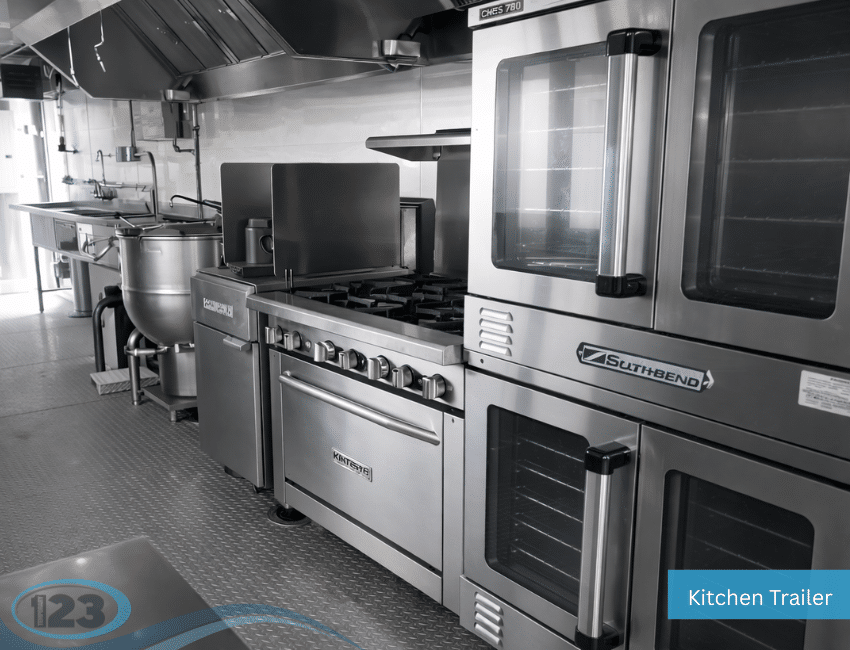
Standard commercial kitchen equipment is useful for flexible menu work. This may include griddles, six-burner ranges, fryers, charbroilers, and convection ovens.
Bulk equipment is more useful for banquets, employee meals, convention feeding, and large breakfast programs.
Temporary Kitchens 123 materials discuss the difference between standard kitchen setups and bulk cooking systems. Bulk kitchens may use tilt skillets, steam kettles, double-stack convection ovens, and hot holding systems to produce large volumes quickly.
| Kitchen Type | Best Hospitality Use | Typical Equipment | Main Advantage |
|---|---|---|---|
| Standard Mobile Kitchen | Restaurant-style menus and flexible service | Griddle, fryer, range, convection oven | Supports variety |
| Bulk Production Kitchen | Banquets, conventions, employee dining | Tilt skillet, kettle, double-stack ovens | Fast large-batch production |
| Temporary Prep Kitchen | Catering and event staging | Prep tables, refrigeration, sinks | Improves workflow |
| Hybrid Kitchen Setup | Large resort renovations | Standard and bulk equipment combined | Protects multiple revenue centers |
A casino resort with buffets, banquets, VIP dining, and employee meals may need more than one kitchen model at the same time.
Why Refrigeration Planning Is Critical in Hospitality Renovations
Refrigeration failures can damage resort operations quickly.
Large hospitality properties may carry inventory for banquets, restaurants, bars, room service, staff dining, and special events all at once.
During renovation projects, permanent walk-in coolers, freezers, and prep coolers may become unavailable or partially disconnected.
Temporary refrigeration trailers and refrigerated containers help protect:
- Proteins
- Produce
- Dairy products
- Prepared foods
- Banquet inventory
- Frozen products
- Beverage inventory
- VIP event items
Ice Fox Equipment materials describe refrigeration trailers and temporary cold storage systems for restaurants, healthcare, schools, hospitality, events, and emergency operations.
Food safety guidance from CDC Food Safety and USDA FSIS highlights why temperature control matters, especially when kitchens are operating through construction and utility disruptions.
Hospitality teams also need to think about placement. Refrigeration trailers should be close enough for kitchen staff but not in areas that interfere with valet, loading docks, guest paths, delivery trucks, fire lanes, or construction staging.
Dishwashing and Warewashing During Resort Renovations
Dishwashing is another hidden pressure point.
Banquets, restaurants, buffets, and staff dining all generate dishes, pans, trays, glassware, utensils, and serviceware.
During renovations, permanent dish rooms may be taken offline or reduced in capacity.
Temporary dishwashing trailers can support high-volume warewashing during these phases.
Temporary Dishwashing Rentals materials describe commercial dishwashing trailers, low-temperature push-through units, and high-temperature conveyor systems. These systems can be especially useful for large hospitality properties that cannot switch fully to disposable service without hurting guest experience.
| Service Area | Dishwashing Challenge | Temporary Solution |
|---|---|---|
| Banquets | Large bursts of plates and glassware | High-capacity dishwashing trailer |
| Buffets | Continuous dish return | Dedicated warewashing flow |
| VIP Dining | Premium serviceware | Separate handling and washing process |
| Employee Dining | High repeated volume | Reusable tray system with dish support |
Some resort projects use disposable service only for employee meals or temporary outdoor service, while maintaining reusable dishware for guest-facing operations.
Power, Water, and Wastewater Planning for Resort Temporary Kitchens
Utility planning is where many temporary kitchen projects run into trouble.
Mobile kitchens may require 100–220 amps depending on kitchen size and equipment. Dishwashing trailers may need significant power and water. Refrigeration trailers may need 40–60 amps. Temporary dining areas may need lighting, HVAC, and service power.
Temporary 123 materials discuss common power ranges for kitchen trailers, dishwashing units, refrigeration trailers, and support systems.
Hospitality renovations also need water and wastewater planning. Dishwashing, food prep, handwashing, cleaning, and sanitation all require reliable water access.
Temporary 123 materials also discuss water trucks, water buffalo trailers, wastewater tanks, pump-out service, attendants, and consumables.
Properties planning around major utility disruptions may also review
how foodservice operations continue during major utility failures
, because water, gas, and electrical interruptions can quickly affect resort kitchens.
How Temporary Kitchens Protect Guest Experience
Guest experience is one of the biggest reasons resorts invest in temporary foodservice support.
Most guests do not care that construction is complicated. They care whether breakfast is ready, the wedding meal is hot, the banquet service is smooth, and room service still works.
Temporary kitchens help protect:
- Meal timing
- Food quality
- Banquet consistency
- Breakfast service
- Employee meal support
- VIP hospitality
- Event planner confidence
- Online reviews
Some properties use temporary kitchens behind the scenes so guests never see the operational adjustment.
That is the goal. The guest should not feel the full weight of the renovation.
Case Study: Resort Renovation Protects Banquet Revenue
A destination resort began a major kitchen and ballroom renovation project shortly before a busy wedding and convention season.
Canceling events was not realistic. The property had weddings, corporate meetings, golf groups, and holiday events already booked.
The resort deployed a temporary foodservice system that included:
- Mobile kitchen trailers
- Temporary prep areas
- Refrigeration trailers
- Dishwashing support
- Hot holding systems
- Temporary delivery routes
The temporary system helped protect more than $2 million in booked event revenue during the renovation period.
The property simplified some menus during the first phase, but banquet service continued, breakfast remained stable, and guest-facing disruption was reduced.
The biggest lesson was that foodservice continuity needed to be part of the renovation plan from the beginning, not added after construction started.
How Casino and Resort Projects Can Reduce Foodservice Downtime
The best way to reduce foodservice downtime is to plan early.
Before construction begins, the property should answer:
- Which kitchens will be offline?
- Which restaurants or banquet spaces will be affected?
- What meal periods must be protected?
- How many guests and employees need food daily?
- Where will refrigeration be placed?
- How will dishwashing be handled?
- Where will deliveries enter?
- How will construction routes affect foodservice routes?
- What utilities are available?
- What inspections or permits are required?
Hospitality groups planning longer projects are also reviewing how modular kitchen systems reduce business interruption costs because temporary infrastructure can help protect revenue during major facility upgrades.
Future Trends in Hospitality Temporary Foodservice
In 2026 and beyond, more casino and resort operators are expected to plan temporary foodservice earlier in the renovation process.
The trend is moving toward:
- More modular prep kitchens
- Remote refrigeration monitoring
- Temporary banquet production hubs
- Hybrid dining models
- AI-assisted demand forecasting
- More flexible outdoor dining infrastructure
- Integrated temporary kitchen and dishwashing packages
Properties are also studying the technology powering modern mobile kitchen fleets because large hospitality operations need better visibility into refrigeration, maintenance, and equipment performance during renovations.
Bottom Line
Casino and resort renovations can create major foodservice risks if temporary operations are not planned early.
Temporary kitchens, refrigeration trailers, dishwashing systems, mobile prep areas, and utility support help hospitality properties protect guest experience, banquet revenue, employee meals, and event schedules during construction.
The properties that handle renovations best usually treat foodservice continuity as part of the renovation strategy from day one. The goal is not only to rebuild the kitchen. The goal is to keep the resort experience working while the construction happens behind the scenes.
Casino and resort foodservice teams often review guidance from CDC Food Safety, USDA FSIS, OSHA, and NFPA when planning temporary kitchens, food safety procedures, worker safety, fire protection, sanitation, and commercial cooking ventilation.
Large properties also increasingly consider climate and utility disruption data from NOAA because storms, heat, and power disruptions can affect hospitality continuity planning.
This article was developed using operational information related to Temporary Kitchens 123, Temporary 123, Ice Fox Equipment, temporary dishwashing systems, modular kitchen deployments, refrigeration support, hospitality continuity planning, water and wastewater operations, and institutional foodservice infrastructure across the United States and Canada.
Related company resources include Temporary Kitchens 123, Temporary 123, Ice Fox Equipment, and Temporary Dishwashing Rentals.
Request a Quote
Every project is different.
Contact us today to get a customized solution for your needs.
Call Temporary Kitchens 123 at

Frequently Asked Questions
Why do casinos and resorts use temporary kitchens during renovations?
Casinos and resorts use temporary kitchens to protect banquets, guest dining, VIP service, employee meals, and room service while permanent kitchens or restaurants are under construction.
Can temporary kitchens support hotel banquets and weddings?
Yes. Temporary kitchens, refrigeration trailers, dishwashing systems, and prep areas can support weddings, conferences, banquet meals, and special events during renovations.
What is the biggest foodservice risk during resort renovations?
The biggest risks are lost event revenue, guest dissatisfaction, refrigeration problems, dishwashing bottlenecks, and poor utility planning.
Do resorts need temporary refrigeration during kitchen construction?
Yes. Temporary refrigeration trailers help protect banquet inventory, restaurant supplies, beverages, frozen products, and prepared foods while permanent cold storage is unavailable.
Can casino foodservice continue during major remodeling projects?
Yes. With the right temporary kitchen setup, casino properties can continue employee meals, late-night dining, VIP service, and event support during phased renovations.