
Temporary Kitchens for Federal Courthouse Renovations: Maintaining Secure Foodservice Operations During Multi-Year Government Construction Projects


Article Plan
- Key Takeaways
- Why Federal Courthouse Renovations Are Becoming More Complex
- How Security Requirements Affect Temporary Kitchen Deployment
- Standard Kitchen vs Bulk Production Systems for Federal Operations
- Power, Water, and Wastewater Coordination
- Future Trends in Federal Courthouse Continuity Planning
- Bottom line
- Frequently Asked Questions
Federal courthouses use GSA-approved temporary kitchens, refrigeration systems, modular dining facilities, and secure mobile foodservice infrastructure during phased renovation and modernization projects to maintain operational continuity, workforce feeding, security coordination, and public service functionality while permanent kitchen and building systems are upgraded.
Key Takeaways
- Federal courthouse operations cannot fully shut down during construction: Judges, juries, federal employees, contractors, and security personnel still require daily foodservice support.
- Security complicates temporary kitchen deployment: Courthouse foodservice systems often operate inside controlled access zones with strict operational requirements.
- GSA procurement plays a major role: Agencies typically prefer vendors familiar with federal procurement standards, compliance requirements, and phased government construction operations.
- Temporary kitchens support operational continuity: Mobile kitchens help maintain feeding operations during HVAC upgrades, utility modernization, and dining facility reconstruction.
- Federal renovation projects often last years: Long-term deployments may require refrigeration, wastewater handling, modular dining spaces, generators, and secure infrastructure coordination.
Why Federal Courthouse Renovations Are Becoming More Complex
Federal courthouses across the United States are aging. Many facilities now require major infrastructure upgrades involving HVAC systems, electrical modernization, plumbing replacement, fire suppression systems, accessibility improvements, security enhancements, and utility reconstruction.
At the same time, most courthouse operations continue while construction is happening.
Unlike private commercial buildings, federal courthouses cannot easily pause operations for long periods because they support:
- Federal judicial proceedings
- US Marshals operations
- Jury management
- Public hearings
- Attorney operations
- Administrative staff
- Security coordination
- Detention transport logistics
That creates major operational pressure during renovation projects.
When permanent foodservice infrastructure becomes unavailable during construction, agencies often deploy temporary kitchens and modular dining systems to maintain operational continuity.
Temporary Kitchens 123 operational materials explain that federal deployments often involve much more than cooking equipment alone. Large courthouse operations may also require refrigeration systems, wastewater handling, modular dining infrastructure, ramps, sanitation support, generators, and utility coordination.
Federal continuity planners are also reviewing why foodservice continuity is a core part of emergency preparedness planning because operational continuity directly affects government functionality during long-term construction projects.
Why Courthouse Foodservice Operations Matter More Than People Realize
Many people think courthouse foodservice is only about convenience. In reality, meal operations support multiple operational functions throughout the building.
Courthouse feeding operations may support:
- Federal employees
- Security teams
- Judges
- Jurors
- Contractors
- Maintenance staff
- Emergency personnel
- Detention operations staff
Long courthouse days can create operational challenges if workers constantly leave the building for meals.
During renovations, that problem becomes even more complicated because:
- Construction zones limit movement
- Security checkpoints create delays
- Temporary access routes change traffic patterns
- Nearby foodservice options may become overcrowded
- Operational schedules become harder to coordinate
Temporary kitchens help maintain controlled onsite foodservice while construction continues in phases.
| Courthouse Renovation Challenge | Operational Risk | Temporary Kitchen Solution |
|---|---|---|
| Kitchen reconstruction | Loss of meal service | Mobile kitchen deployment |
| HVAC modernization | Foodservice shutdown | Temporary modular kitchens |
| Security-controlled access | Meal movement delays | Onsite secure feeding operations |
| Long-term phased construction | Operational disruption | Extended continuity infrastructure |
| Utility replacement | Refrigeration and sanitation risks | Backup infrastructure systems |
How Security Requirements Affect Temporary Kitchen Deployment
Courthouse operations are heavily influenced by security procedures.
That means temporary kitchen deployments often require careful planning involving:
- Controlled access zones
- Vehicle screening procedures
- Restricted delivery routes
- Secure utility placement
- Temporary fencing coordination
- ADA-compliant pathways
- Operational separation between construction and public areas
In some cases, mobile kitchens may operate inside secure perimeters. In other cases, temporary dining systems may need to support workers across multiple access-controlled zones.
This creates a level of operational complexity that many standard commercial foodservice projects do not face.
Government agencies therefore often prefer turnkey providers capable of coordinating infrastructure, logistics, and deployment planning together.
Why GSA Procurement Matters During Courthouse Projects
Federal courthouse renovations usually involve strict procurement and compliance procedures.
Government agencies often prioritize vendors familiar with:
- GSA procurement systems
- Federal acquisition requirements
- Security coordination
- Project documentation
- Infrastructure compliance
- Emergency continuity planning
- Phased government construction operations
Large courthouse projects often involve multiple contractors and phased construction schedules. Temporary foodservice providers therefore need strong coordination with:
- General contractors
- Facilities management teams
- Security personnel
- Electrical contractors
- Plumbing teams
- Government procurement officers
The more complex the renovation becomes, the more important deployment coordination becomes.
How Temporary Kitchens Support Multi-Year Government Renovations
Many courthouse modernization projects continue for years instead of months.
During long-term projects, agencies still need stable foodservice systems that support:
- Daily workforce feeding
- Secure dining operations
- Refrigeration continuity
- Hydration access
- Sanitation compliance
- Operational scheduling
- Public service continuity
Temporary kitchen deployments may therefore include:
- Mobile kitchen trailers
- Temporary refrigeration systems
- Dishwashing support
- Climate-controlled dining structures
- Wastewater handling systems
- Portable sanitation support
- Generator infrastructure
- ADA ramps and walkways
Organizations planning long-term operational continuity are also reviewing how modular kitchen systems reduce business interruption costs because phased government renovations can create operational disruption for extended periods.
Standard Kitchen vs Bulk Production Systems for Federal Operations
Different courthouse projects require different foodservice models.
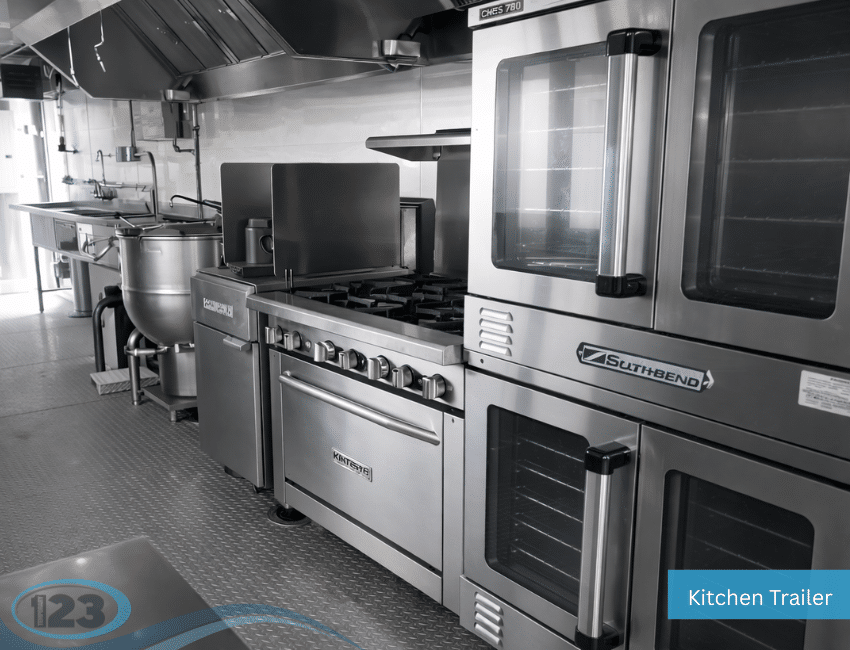
Smaller federal facilities may use standard commercial kitchen systems with:
- Ranges
- Griddles
- Convection ovens
- Prep tables
- Fryers
Larger courthouse complexes or regional federal centers may require bulk production systems capable of supporting large workforce populations daily.
Temporary Kitchens 123 operational materials discuss bulk production systems using:
- Tilt skillets
- Steam kettles
- Double-stack convection ovens
- Bulk refrigeration systems
- Large hot holding systems
| Kitchen Type | Best Federal Use | Main Advantage |
|---|---|---|
| Standard Mobile Kitchen | Smaller courthouse operations | Flexible menu preparation |
| Bulk Production Kitchen | Large federal complexes | High-volume meal production |
| Hybrid Kitchen Setup | Long-term phased renovations | Operational flexibility |
| Grab-and-Go Feeding Systems | High-security workforce operations | Fast service and movement |
Why Refrigeration Continuity Is Critical During Federal Renovations
Temporary refrigeration systems become extremely important during courthouse renovation projects.
Federal foodservice operations may store:
- Prepared meals
- Proteins
- Dairy products
- Beverages
- Frozen inventory
- Produce
- Emergency reserve stock
Construction activity often creates refrigeration risks involving:
- Temporary utility interruptions
- Electrical shutdowns
- Restricted loading access
- Changing traffic patterns
- Dust exposure
- HVAC disruptions
Ice Fox Equipment materials describe refrigeration trailers and cold storage systems used during healthcare continuity projects, disaster-response operations, industrial deployments, and government facility renovations.
Food safety guidance from CDC Food Safety and USDA FSIS emphasizes proper cold chain management during institutional feeding operations.
A courthouse refrigeration continuity plan should include:
- Backup power systems
- Temperature monitoring
- Emergency contingency planning
- Protected trailer placement
- Secure delivery coordination
- Inventory rotation procedures
Power, Water, and Wastewater Coordination
Temporary courthouse feeding operations depend heavily on temporary utility coordination.
Temporary Kitchens 123 operational materials discuss infrastructure needs including:
- 100–220 amp electrical systems
- Generator coordination
- Potable water support
- Wastewater holding systems
- Pump-out scheduling
- Grease management infrastructure
- Temporary utility routing
Federal courthouse projects therefore require coordination between:
- Facilities management teams
- General contractors
- Government procurement staff
- Electrical contractors
- Sanitation providers
- Kitchen deployment teams
Without strong coordination, operational continuity becomes much harder during phased renovations.
Why Dining Facilities Support Operational Stability
Temporary dining facilities support much more than simple meal service.
They also support:
- Workforce coordination
- Security scheduling
- Hydration access
- Operational continuity
- Staff morale
- Climate protection
Temporary dining systems may include:
- Climate-controlled dining structures
- Tables and seating
- Coffee stations
- Hydration areas
- Lighting systems
- Subflooring
- Portable sanitation support
Temporary Kitchens 123 materials discuss modular dining facilities with HVAC, cafeteria-style layouts, steam tables, and large-capacity seating systems.
Case Study: Federal Courthouse Modernization Project
A major federal courthouse began a multi-year modernization project involving:
- HVAC replacement
- Electrical modernization
- Kitchen reconstruction
- Security upgrades
- ADA improvements
- Utility infrastructure replacement
The courthouse still needed to support:
- Judges
- Federal employees
- US Marshals
- Contractors
- Jurors
- Operational staff
The deployment included:
- Mobile kitchen trailers
- Temporary refrigeration systems
- Climate-controlled dining structures
- Wastewater handling support
- Portable sanitation systems
- ADA-compliant access systems
- Generator infrastructure
The operation supported more than 2,800 meals daily during active renovation phases while maintaining secure operational continuity throughout the courthouse complex.
One of the biggest lessons from the project was that temporary foodservice planning needed to begin early during renovation coordination instead of after construction schedules were finalized.
Why Government Agencies Are Prioritizing Operational Continuity
Federal agencies increasingly recognize that continuity planning affects:
- Public service operations
- Security coordination
- Emergency preparedness
- Workforce stability
- Operational scheduling
- Infrastructure resilience
Organizations are also reviewing how foodservice providers handle supply chains during emergency deployments because logistics disruptions can quickly affect federal continuity operations during emergencies and construction projects.
Future Trends in Federal Courthouse Continuity Planning
In 2026 and beyond, courthouse modernization projects will likely involve more advanced temporary infrastructure systems as federal agencies continue upgrading aging facilities.
The trend is moving toward:
- Modular continuity infrastructure
- Remote refrigeration monitoring
- Integrated emergency feeding systems
- Hybrid power support
- Improved sanitation coordination
- Rapid deployment operational systems
- Long-term phased continuity planning
Federal planners are also reviewing the technology powering modern mobile kitchen fleets because operational visibility and deployment reliability are becoming more important during government infrastructure projects.
Bottom Line
Federal courthouse modernization projects are becoming increasingly complex as aging government infrastructure undergoes long-term renovation and security upgrades.
Temporary kitchens, refrigeration systems, modular dining facilities, wastewater infrastructure, and secure foodservice continuity systems help agencies maintain operations while phased construction continues safely.
The strongest courthouse continuity programs treat foodservice infrastructure as part of operational resilience instead of temporary convenience. During multi-year federal renovation projects, maintaining stable feeding operations helps keep government systems functioning effectively.
This article was developed using operational information related to Temporary Kitchens 123, Temporary 123, Ice Fox Equipment, temporary dishwashing systems, modular kitchen deployments, senior living foodservice continuity, refrigeration support, water and wastewater planning, and institutional foodservice infrastructure across the United States and Canada. Related company resources include Temporary Kitchens 123, Temporary 123, Ice Fox Equipment, and Temporary Dishwashing Rentals.Federal courthouse continuity operations often review guidance from GSA, FEMA, CDC, USDA FSIS, OSHA, and NFPA when planning sanitation systems, emergency feeding, infrastructure resilience, foodservice continuity, and operational security during federal renovations.
Agencies also increasingly review climate resilience planning because severe weather and utility disruptions can affect long-term federal infrastructure modernization projects.
Request a Quote
Every project is different.
Contact us today to get a customized solution for your needs.
Call Temporary Kitchens 123 at

Frequently Asked Questions
Why do federal courthouses use temporary kitchens during renovations?
Federal courthouses use temporary kitchens to maintain feeding operations, workforce continuity, and operational stability while permanent kitchen systems and infrastructure are upgraded.
What makes courthouse temporary kitchen deployments different?
Courthouse deployments often involve security-controlled access zones, federal procurement requirements, phased construction schedules, and operational continuity planning.
Can temporary kitchens operate inside secure government facilities?
Yes. Mobile kitchens and modular dining systems can be coordinated within controlled government environments depending on project requirements and security planning.
Why is refrigeration continuity important during courthouse renovations?
Temporary refrigeration systems protect prepared meals, proteins, dairy products, beverages, and workforce food inventory during infrastructure disruptions and phased construction.
How do temporary kitchens improve federal continuity planning?
Temporary kitchens help agencies maintain workforce feeding, operational scheduling, security coordination, and public service continuity during major renovation projects.